Support
Hot Dogs vs. Sausages: What’s the Difference?
Confused about hot dogs vs. sausages? Learn the key differences in ingredients, texture, and quality. Expert guide from Malaysia's artisanal producers.
by Loo KK · 24/10/2025
Standing in front of the refrigerated section or planning your next BBQ, you’ve probably wondered: what’s actually the difference between a hot dog and a sausage? Are they the same thing with different names, or are there real distinctions that matter?
The short answer: all hot dogs are sausages, but not all sausages are hot dogs. Hot dogs are a specific type of highly processed sausage, while “sausage” is a broad category that includes everything from artisanal bratwurst to commercial frankfurters.
Understanding these differences helps you make informed choices about what you’re eating and serving—especially when ingredient quality, texture, and flavor matter. At Abraham’s Sausages & Meats Malaysia, we handcraft authentic sausages using traditional methods, and we believe knowing what you’re eating is the first step to appreciating real quality.
This guide breaks down the key differences in ingredients, processing, texture, flavor, and quality indicators so you can confidently choose the right product for your needs.

Table of Content
What Is a Sausage?
A sausage is ground or minced meat (pork, beef, chicken, or combinations) mixed with seasonings, salt, and sometimes fat, then stuffed into a casing. Sausages have been made for thousands of years as a method of preserving and utilizing various meat cuts.
Characteristics of Sausages
- Meat content varies widely from 60% to 95%+ depending on quality and style
- Casings can be natural (animal intestines) or synthetic (collagen, cellulose)
- Texture ranges from coarse-ground artisanal to finely emulsified commercial
- Seasonings define regional styles (Italian fennel, German caraway, Polish garlic)
- Can be fresh, cured, smoked, or cooked

Categories of Sausages
- Fresh sausages: Raw, must be cooked before eating (Italian sausage, breakfast sausage, bratwurst)
- Cured sausages: Salt-preserved, some ready-to-eat (salami, pepperoni)
- Cooked sausages: Fully cooked during production, only need reheating (hot dogs, bologna)
- Smoked sausages: Cooked and smoked for flavor (kielbasa, andouille)
Artisanal vs. Commercial Sausages: The quality spectrum is enormous. Artisanal producers like Abraham’s use whole muscle cuts, natural casings, and authentic spice blends with minimal processing. Common commercial practices involve processes using mechanically separated meat, artificial casings, preservatives, and fillers to reduce costs and extend shelf life.
What Is a Hot Dog?
A hot dog (also called frankfurter or wiener) is a cooked and emulsified sausage made from finely ground meat that’s been processed into a smooth paste, seasoned, stuffed into casings, then fully cooked and often smoked.

Standard Hot Dog Composition
Read with care. While these are the common practices in the industry, it does not necessarily mean every manufacturer of hotdogs readily purchasable in the market follow the same processes:
- Meat content: 40-60% (remaining is water, fat, fillers, and binders)
- Meat type: Usually pork and/or beef, sometimes chicken or turkey
- Texture: Smooth, homogeneous, no visible meat particles
- Processing: Mechanically separated meat (MSM) common in lower-grade products
- Additives: Preservatives (sodium nitrite), flavor enhancers (MSG), stabilizers, artificial colors
Manufacturing Process
- Meat is finely ground into a paste-like emulsion
- Water, fat, salt, and seasonings blended in
- Fillers and binders (corn syrup, modified starch) added for texture
- Mixture stuffed into synthetic casings
- Products cooked to 75°C+ to fully cook
- Often smoked for flavor
- Casings may be removed (skinless) or left on
Why Hot Dogs Taste Different: The fine emulsification and high processing create that characteristic smooth, uniform texture with a slightly salty, generic “hot dog” flavor that’s instantly recognizable but far removed from whole-meat texture. The use of curing salts gives the distinctive pink color.
Quality Range
Like all sausages, hot dogs exist on a quality spectrum:
- Premium hot dogs: Higher meat content (60%+), natural casings, better meat cuts
- Standard hot dogs: 40-50% meat, synthetic casings, mechanically separated meat
- Economy hot dogs: Minimum meat content, maximum fillers, lowest-grade meat
Key Differences: Hot Dogs vs. Sausages
Meat Content & Quality
Hot Dogs:
- 40-60% meat content (remainder is water, fat, fillers)
- Often mechanically separated meat (MSM) – meat paste stripped from bones
- Uniform, finely ground emulsion with no texture variation
- Lower-grade meat cuts and trimmings commonly used**
**Again, read with cautions. It does not necessarily mean every manufacturer are following the same processes.
Artisanal Sausages:
- 75-95%+ meat content from whole muscle cuts
- Coarse to medium grind showing visible meat texture
- Real pork shoulder, beef chuck, or quality chicken used
- Fat content deliberately included for flavor and juiciness
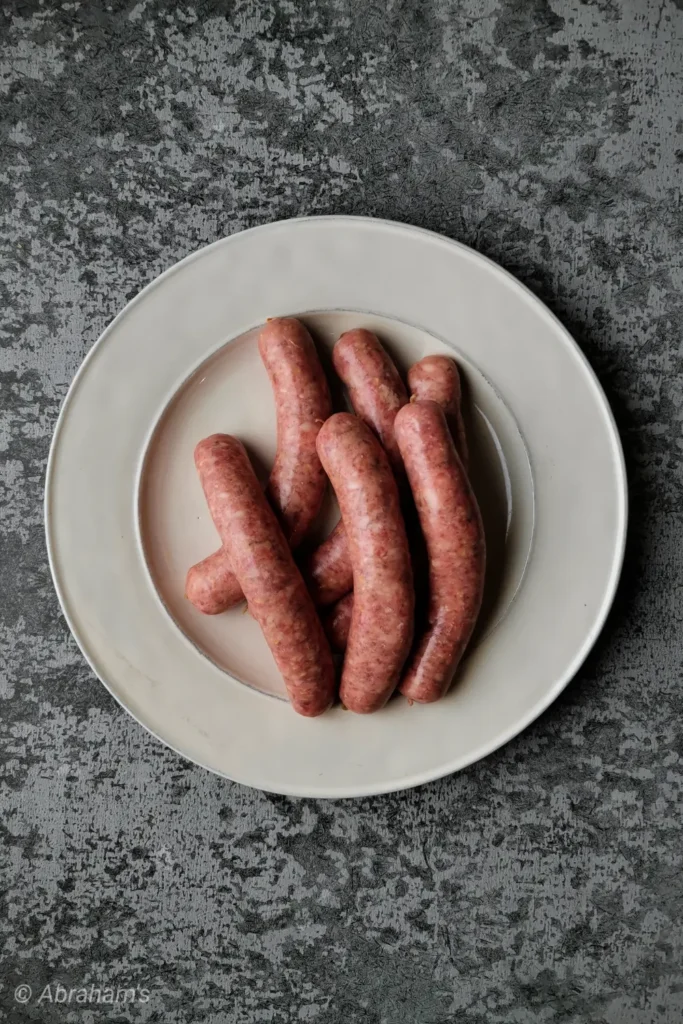
Abraham’s Standard: Our sausages contain 80-85% meat from whole pork shoulder, with the remaining 15-20% being natural fat, seasonings, and minimal water. No fillers, no mechanically separated meat, no extenders. You can see and taste real meat texture in every bite.
Processing Method
Hot Dogs:
- Mechanically emulsified into smooth paste
- High heat processing (fully cooked to 75°C+)
- Often smoked artificially or with liquid smoke
- Synthetic casings or casing-free (skinless)
- Heavily processed with multiple additives

Artisanal Sausages:
- Hand-mixed or low-speed ground to preserve texture
- Sold fresh (raw) requiring cooking before consumption
- Natural smoking over real wood (if smoked)
- Natural casings from animal intestines
- Minimal processing preserves authentic meat character
Abraham’s Standard: Our sausages contain 80-85% meat from whole pork shoulder, with the remaining 15-20% being natural fat, seasonings, and minimal water. No fillers, no mechanically separated meat, no extenders. You can see and taste real meat texture in every bite.

Texture & Mouthfeel
Hot Dogs:
- Smooth, homogeneous, uniform throughout
- Snappy or rubbery casing (if present)
- No variation in texture from bite to bite
- Slightly bouncy, emulsified consistency
Artisanal Sausages:
- Coarse, meaty texture with visible fat marbling
- Natural casing provides delicate snap without rubber texture
- Texture variation creates interest in every bite
- Juicy, fibrous meat structure that feels substantial
Ingredients & Additives
Typical Hot Dog Ingredients:
- Mechanically separated pork/beef
- Water (often 20-30% of product weight)
- Corn syrup or dextrose
- Modified food starch (filler/binder)
- Sodium phosphate (moisture retention)
- Sodium nitrite (preservative, color fixative)
- Flavor enhancers (MSG common)
- Artificial smoke flavoring

Artisanal Sausage Ingredients (Abraham’s Example):
- Pork shoulder
- Sea salt
- Black pepper
- Garlic
- Paprika
- Natural spices
- Natural casings
- That’s it. No preservatives, no artificial anything.
Reading Labels: A simple rule: if you can’t pronounce ingredients or the list exceeds 10 items, it’s heavily processed. Authentic sausages have 5-8 recognizable ingredients.

Flavor Profile
Hot Dogs:
- Mild, generic “hot dog” flavor
- Salty with slight sweetness from corn syrup
- Smoky undertones (often artificial)
- Flavor doesn’t vary much between bites
- Lacks complexity or depth
Artisanal Sausages:
- Complex, layered flavors from real spices
- Meat flavor dominates (pork tastes like pork)
- Natural fat enhances richness
- Seasonings distinct and balanced
- Flavor develops during cooking
Why the Difference? Heavy processing in hot dogs mutes natural meat flavors. Emulsification and high heat denature proteins and fats, creating uniform but one-dimensional taste. Artisanal sausages preserve meat integrity, allowing authentic flavors to shine through
Preparation & Serving
Hot Dogs:
- Pre-cooked, only need reheating
- Boiling, grilling, or microwaving common
- Typically served in soft white buns
- Heavy reliance on condiments (ketchup, mustard, relish) to add flavor
- Quick convenience food
Artisanal Sausages:
- Raw (fresh), must be cooked to 75°C internal temperature
- Pan-frying, grilling, or oven baking recommended
- Served with crusty bread, in sandwiches, or as main protein
- Flavor stands alone, condiments complement rather than mask
- Requires proper cooking technique
Why the Difference? Heavy processing in hot dogs mutes natural meat flavors. Emulsification and high heat denature proteins and fats, creating uniform but one-dimensional taste. Artisanal sausages preserve meat integrity, allowing authentic flavors to shine through
Cultural & Culinary Context
Hot Dogs:
- American invention (late 1800s)
- Street food, ballpark food, quick meals
- Associated with convenience and nostalgia
- Limited culinary versatility
- Standardized flavor across brands
Artisanal Sausages:
- Ancient food with regional
- European roots
- Celebration food, chef-driven menus, quality dining
- Cultural identity tied to region (German bratwurst, Polish kielbasa, Italian sausage)
- Highly versatile in cooking applications
- Infinite flavor variations by region and maker
Why the Difference? Heavy processing in hot dogs mutes natural meat flavors. Emulsification and high heat denature proteins and fats, creating uniform but one-dimensional taste. Artisanal sausages preserve meat integrity, allowing authentic flavors to shine through
Frankfurter vs. Sausage: What's the Difference?
Traditional German Frankfurter:
- Made from pure pork (no beef or chicken)
- Natural casings (traditionally sheep intestine)
- Lightly smoked over beechwood Seasoned simply with salt, pepper, nutmeg
- Must be made in Frankfurt region to be officially called “Frankfurter Würstchen” in Germany
- Higher meat content and quality than American hot dogs
American “Frankfurter” (Hot Dog):
- Beef and/or pork blend
- Heavily processed emulsion
- Synthetic casings or skinless
- Artificial smoke flavoring
- No geographic protection or quality standards
Key Distinction: In Germany, “Frankfurter” is a protected regional specialty with quality standards. In the U.S., “frankfurter” became a generic term for hot dogs, losing its original meaning and quality association.
Why This Matters: When you see “frankfurter” on a package in Malaysia, it usually means American-style hot dog, not the authentic German original. If you want authentic German-style sausage, look for “bratwurst” or ask for artisanal products specifically.
Bratwurst vs. Hot Dog: The Quality Gap
Since “bratwurst” appears frequently in searches alongside hot dog comparisons, let’s address this directly.
Bratwurst Characteristics:
- Fresh (raw) German sausage requiring full cooking
- Coarse-ground pork, sometimes veal or beef
- Natural casings providing delicate snap
- Seasoned with caraway, marjoram, nutmeg, garlic 85-90% meat content from quality cuts
- Traditional preparation: grilled or pan-fried until golden
Cooking Differences:
- Bratwurst: Must be cooked fresh, takes 15-20 minutes, develops crispy golden crust
- Hot Dog: Already cooked, just needs 5 minutes reheating, stays pale pink
The Comparison: Comparing bratwurst to hot dogs is like comparing fresh-baked artisan bread to packaged white bread. Both are made from similar base ingredients (flour/meat), but the quality, processing, texture, and flavor are worlds apart.
Flavor Differences:
- Bratwurst: Complex spice blend, authentic pork flavor, juicy with natural fat
- Hot Dog: Generic salty-sweet profile, uniform taste, flavor depends on condiments
Hot Dog Characteristics:
- Fully cooked, emulsified, ready-to-eat
- Fine paste texture with no visible meat particles 40-60% meat content with fillers
- Synthetic casings or skinless
- Mild, uniform flavor with heavy salt/preservatives
How to Identify Quality Sausages
Whether shopping for bratwurst, Italian sausage, or breakfast links, use these indicators to assess quality:
Visual Inspection
High Quality:
- Uneven, textured surface (visible meat particles)
- Natural color variation (not uniform pink)
- Natural casings slightly translucent
- Real fat marbling visible through casing
Lower Quality:
- Perfectly smooth, uniform surface
- Bright, artificial pink color
- Synthetic shiny casings
- No texture variation whatsoever
Ingredient List Check
Look For:
- Meat listed FIRST (pork, beef, chicken) 5-8 recognizable ingredients total
- No preservatives (sodium nitrite, sodium benzoate)
- No artificial colors or flavors
- Natural casings specified
Red Flags:
- “Mechanically separated meat” listed
- Water as second or third ingredient
- Corn syrup, dextrose, or modified starch
- Sodium phosphate or other chemical-sounding names 15+ ingredients listed
The Abraham's Difference: Our Approach to Authentic Sausages
At Abraham’s Sausages & Meats Malaysia, we craft sausages the traditional way because we believe food should be made from real ingredients, not chemistry experiments.
Our Standards
Real Meat, Real Texture
- 80-85% whole pork shoulder, never mechanically separated meat
- Coarse to medium grind preserving authentic meat texture
- Natural fat inclusion (15-20%) for juiciness and flavor
- You can see meat fibers and texture variation in every bite
Natural Ingredients
- Only No preservatives (no sodium nitrite, no sodium benzoate)
- No artificial colors making meat look “pinker”
- No artificial flavors or smoke flavoring
- No fillers (no corn syrup, no modified starch, no soy protein)
Natural Casings
- Imported natural hog casings for authentic snap
- Delicate texture, not rubbery
- Allows sausages to breathe during cooking
- Traditional appearance and mouthfeel
Traditional Seasoning
- Authentic spice blends for each sausage style
- Real garlic, real paprika, real black pepper
- Balanced seasoning that enhances, not masks, meat flavor
- Recipes refined through testing with chefs
Handcrafted in Small Batches
- Made fresh to order, not mass-produced
- Quality control at every step
- Personal attention to texture and consistency
- Engineering precision applied to artisanal craft
What You Won’t Find in Abraham’s Sausages:
❌ Mechanically separated meat
❌ Preservatives
❌ Artificial colors or flavors
❌ Fillers or binders
❌ Synthetic casings
❌ “Hot dog” texture
What You Will Find:
✅ Real pork shoulder
✅ Authentic meaty texture
✅ Natural ingredients only
✅ Traditional craftsmanship
✅ Flavor that stands on its own
Chooseing Between Hot Dogs vs. Artisanal Sausages
Both have their place depending on your needs:
Choose Artisanal Sausages When:
- Flavor and quality are priorities
- You want to know exactly what you’re eating
- Cooking for food-conscious guests or family
- Creating chef-level dishes at home
- Supporting small producers and traditional craftsmanship
- You have time for proper cooking (15-20 minutes)
- Texture and authenticity matter
Choose Hot Dogs When:
- You need maximum convenience (pre-cooked, quick reheat)
- Serving large crowds on tight budget
- Kids specifically request “hot dogs” (familiar comfort food)
- Making classic American dishes (chili dogs, corn dogs)
- Speed matters more than quality
Chef's Perspective
Professional kitchens overwhelmingly choose artisanal sausages for menu applications because:
- Authentic texture elevates dish quality
- Flavor stands up to sauces and accompaniments
- Natural ingredients align with “clean menu” trends
- Can charge premium pricing for quality ingredients
- Differentiation from chain restaurants serving commodity products
Frequently Asked Questions
Are hot dogs considered sausages?
Yes, hot dogs are technically a type of sausage—specifically, a fully cooked, emulsified sausage. However, they represent the most heavily processed end of the sausage spectrum. All hot dogs are sausages, but not all sausages are hot dogs.
What makes hot dogs different from other sausages?
Hot dogs are distinguished by their fine emulsification (smooth paste texture), full pre-cooking during manufacturing, lower meat content (40-60%), heavy use of fillers and preservatives, and synthetic or removed casings. Most fresh sausages have coarse texture, 80-95% meat content, natural casings, and require cooking before eating.
Are frankfurters and hot dogs the same thing?
In the United States and most of Malaysia, yes—the terms are used interchangeably. However, traditional German Frankfurters are higher quality with natural casings, pure pork, and regional production standards. When you see “frankfurter” on packaging in Malaysia, it usually means American-style hot dog.
Which is healthier: hot dogs or fresh sausages?
Fresh artisanal sausages are generally healthier because they contain fewer preservatives, no artificial additives, higher protein content, and lower sodium. However, both are occasional foods high in fat and calories. The key difference is ingredient quality: real meat vs. mechanically separated meat with fillers.
Can I substitute hot dogs for sausages in recipes?
While possible, the results will differ significantly. Hot dogs have mild, uniform flavor that doesn’t develop during cooking since they’re pre-cooked. Fresh sausages bring complex flavor, textural interest, and authentic character to dishes. Recipes designed for Italian sausage, bratwurst, or chorizo won’t deliver the same results with hot dogs substituted.
Why are artisanal sausages more expensive than hot dogs?
Quality ingredients cost more. Whole pork shoulder, natural casings, authentic spices, and small-batch handcraft production create higher costs. Hot dogs achieve low prices through mechanically separated meat, synthetic casings, fillers, and high-speed automated production. The price difference reflects genuine quality difference.
Do hot dogs contain meat?
Yes, but the quality and percentage vary widely. Standard hot dogs contain 40-60% meat (often mechanically separated), with the remainder being water, fat, and fillers. Premium hot dogs may contain 60-70% meat. Always check ingredient labels—”mechanically separated meat” indicates lower quality.
How can I tell if a sausage is high quality?
Check the ingredient list: look for meat as the first ingredient, 5-8 total recognizable ingredients, natural casings, and no preservatives or artificial additives. Visually, quality sausages show texture variation, natural color, and visible meat particles. Price is also an indicator—quality costs more than raw ingredients.
Making Informed Choices
Understanding the difference between hot dogs and artisanal sausages empowers you to make decisions aligned with your values, whether that’s convenience, ingredient quality, flavor, or supporting traditional craftsmanship.
The bottom line: Hot dogs serve a purpose as quick, convenient food, but they shouldn’t be confused with authentic sausages made from real ingredients using traditional methods. If you care about what you’re eating—and we believe you should—choosing products made from whole ingredients without heavy processing makes a meaningful difference.
At Abraham’s Sausages & Meats Malaysia, we’re committed to transparency about what goes into our products and how they’re made. We believe food made by real people from real ingredients tastes better and deserves a place on your table.
Ready to Taste the Difference?
Experience authentic sausages handcrafted with real ingredients and traditional methods: